
Waterjet Cutting Services in Chennai | Precision Cutting for All Materials”
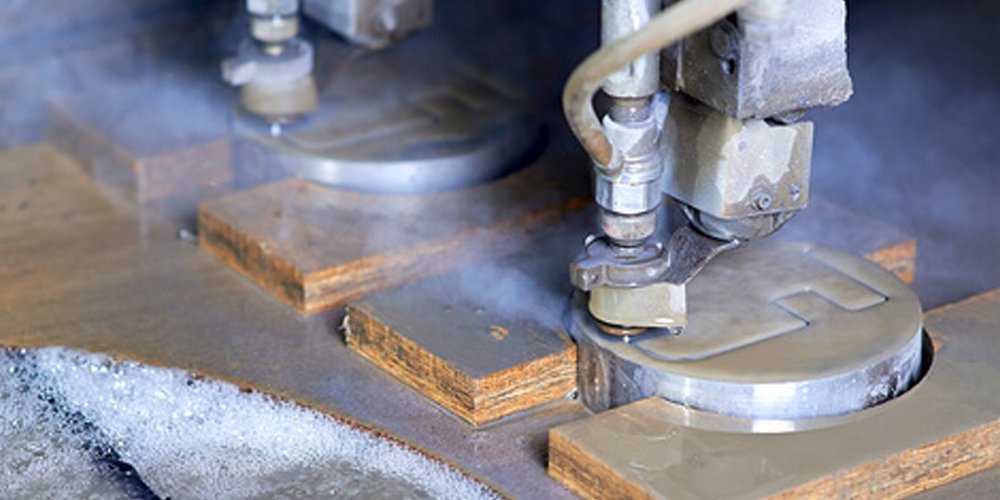
Waterjet cutting is an advanced, efficient, and highly versatile technology that has become a crucial part of industries ranging from manufacturing and aerospace to art and architecture. Unlike traditional cutting methods, waterjet cutting uses a high-pressure stream of water, sometimes combined with abrasives, to slice through a wide variety of materials. This process offers a high degree of precision, eliminates the risk of thermal damage to the material, and reduces environmental impact, making it a preferred choice for cutting intricate designs or working with materials sensitive to heat.
History of Waterjet Cutting
Waterjet cutting technology traces its origins to the early 20th century when hydraulic mining used high-pressure water to erode rock and soil. However, it wasn’t until the 1950s that the concept of waterjet cutting was seriously explored for industrial use. Dr. Norman Franz, a forest engineer, first developed the idea to use high-pressure water jets to cut through wood. His experiments laid the groundwork for future innovations.
Principles of Waterjet Cutting
Waterjet cutting works by using extremely high-pressure water to erode materials. When cutting softer materials like rubber, foam, or textiles, pure waterjet cutting is used. For tougher materials, such as metals or ceramics, an abrasive material like garnet is mixed with the water to enhance cutting power.
Components of a Waterjet System
A typical waterjet cutting system consists of several key components:
High-Pressure Pump: This is the heart of the waterjet system, generating water pressures that can range from 30,000 to 90,000 psi (pounds per square inch). Some high-end pumps can generate even higher pressures. This water is then delivered to the cutting head through a series of high-pressure tubing.
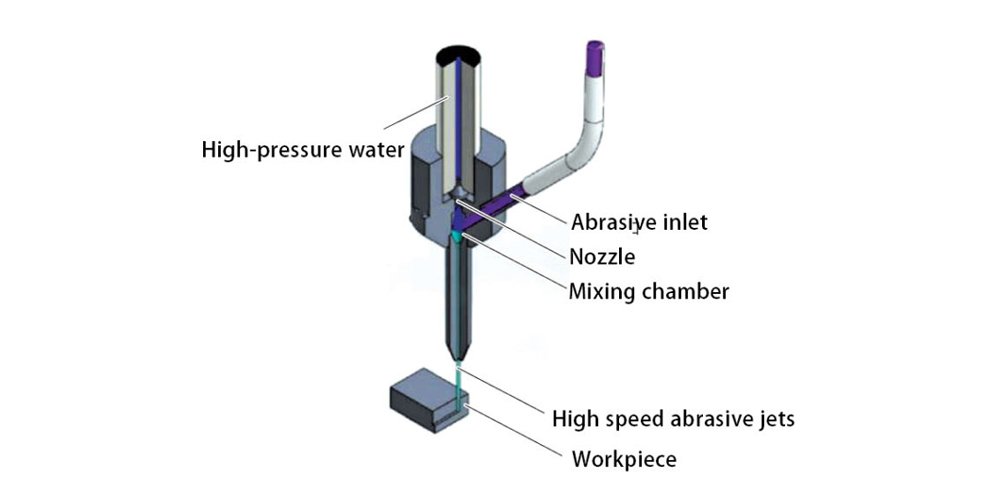
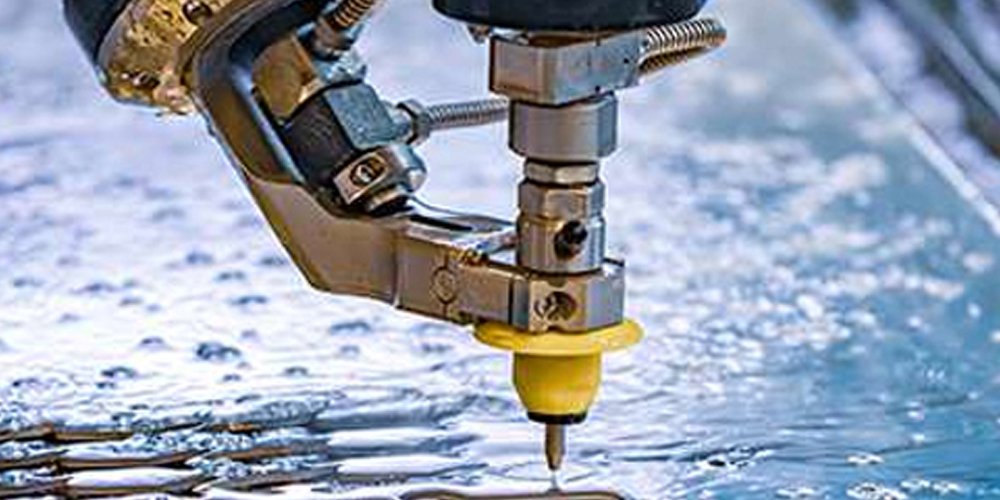
Cutting Head and Nozzle: The cutting head houses the nozzle, through which the pressurized water is expelled. The nozzle size typically ranges from 0.004 inches to 0.020 inches in diameter, allowing for an extremely fine cutting stream. When cutting harder materials, an abrasive is introduced just before the water exits the nozzle.
Abrasive Delivery System: For abrasive waterjet cutting, the system includes an abrasive hopper that feeds fine particles into the high-pressure water stream. Garnet is the most commonly used abrasive because it is hard, durable, and readily available.
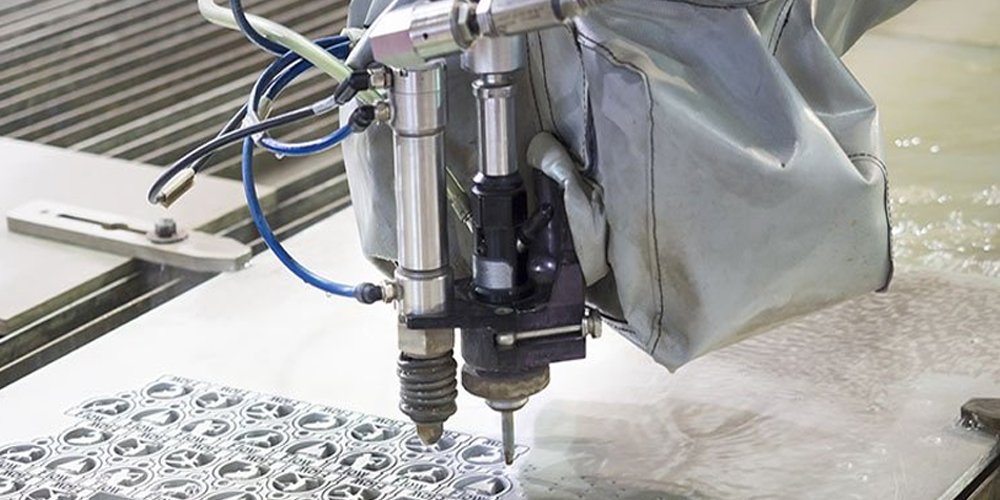
Control System: Modern waterjet machines are equipped with CNC (Computer Numerical Control) systems that allow for automated, highly accurate cutting. The control system allows the operator to input designs and control the cutting speed, angle, and path, ensuring precision in even the most intricate cuts.
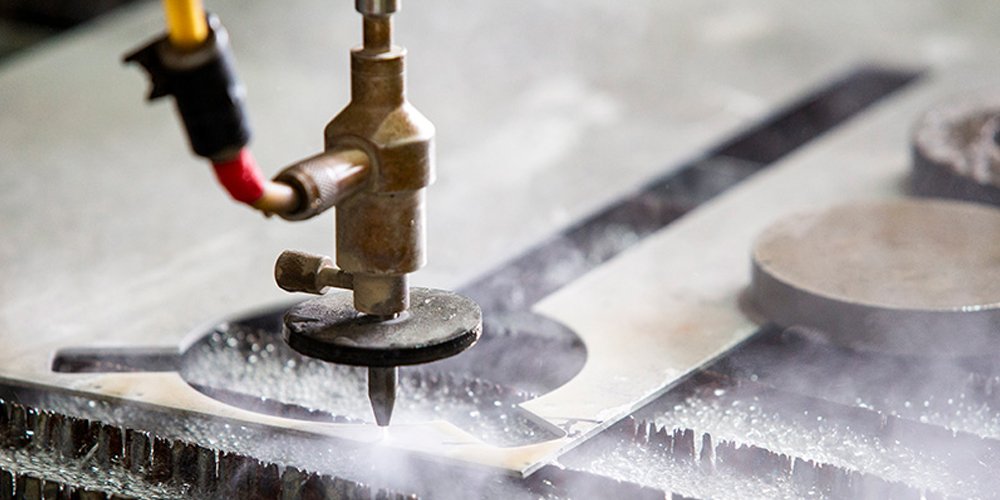
Catch Tank: The catch tank or cutting bed is where the material is placed during cutting. It is typically filled with water to absorb the energy of the cutting stream and trap any debris.
Types of Waterjet Cutting
Waterjet cutting can be divided into two main categories:
- Pure Waterjet Cutting
Pure waterjet cutting uses only water to cut materials and is primarily used for softer materials that do not require abrasive additives. Some common materials that are cut using pure waterjet include:
- Rubber: Ideal for cutting without fraying or distortion.
- Foam: Achieves clean, smooth cuts for packaging or industrial use.
- Textiles: Commonly used in the garment industry for cutting multiple layers of fabric.
- Food Products: Used in the food industry for precision slicing without contamination.
Pure waterjet cutting is eco-friendly, generating little to no waste, and is cost-effective for these applications.
- Abrasive Waterjet Cutting (AWJ)
Abrasive waterjet cutting is used for harder materials that cannot be cut with water alone. The abrasive, usually garnet, increases the erosive power of the water stream, allowing it to cut through materials such as:
- Metals: Stainless steel, aluminum, titanium, and other alloys can be cut with great precision and no heat distortion.
- Ceramics: Waterjet cutting is often used for delicate ceramics, especially when heat damage must be avoided.
- Stone: Marble, granite, and other natural stones are cut for use in construction, sculpture, and architecture.
- Glass: Waterjet cutting allows for intricate designs in both tempered and laminated glass without the risk of cracking.
Abrasive waterjet cutting is widely used in industries like aerospace, automotive, and heavy machinery due to its ability to cut through extremely tough materials with high accuracy.
Advantages of Waterjet Cutting
Waterjet cutting offers several unique benefits over other cutting techniques such as laser, plasma, or mechanical cutting. Here are some of its key advantages:
- No Heat-Affected Zone (HAZ)
One of the standout features of waterjet cutting is its cold cutting process. Unlike laser or plasma cutting, which generate heat, waterjet cutting does not alter the molecular structure of the material being cut. This is crucial for materials that are sensitive to temperature changes, such as metals that might warp or weaken when exposed to heat.
- Precision and Versatility
Waterjet systems are highly precise, capable of cutting intricate designs with tolerances as low as ±0.001 inches. The process can create sharp corners, bevels, complex shapes, and multi-dimensional cuts in a wide range of materials, making it ideal for industries that require high accuracy, such as aerospace and electronics.
- Environmentally Friendly
Waterjet cutting is a green technology in several ways:
- It uses water as the primary cutting medium, and the abrasive material (garnet) is non-toxic and can often be recycled.
- There is no emission of harmful gases, fumes, or dust, as the process is entirely water-based.
- It produces very little waste material, as the cuts are fine and generate minimal kerf (the material removed during cutting).
- Minimal Material Waste
Due to the precision of waterjet cutting, material waste is kept to a minimum. The narrow kerf of the cut reduces the amount of scrap, and the flexibility of the process allows for efficient use of materials, even when cutting complex designs.
- Can Cut Almost Any Material
Waterjet cutting can slice through almost any material, including metals, plastics, composites, rubber, ceramics, stone, and glass. This versatility makes it ideal for manufacturers that work with a wide variety of materials.
- Safety
Waterjet cutting is a safe process compared to some other methods. There are no sparks, fumes, or hot surfaces to deal with, and the risk of injury is lower compared to mechanical cutting tools or heat-based cutting techniques.
Applications of Waterjet Cutting
Waterjet cutting is used in a broad range of industries, each benefiting from the precision, flexibility, and eco-friendliness of the technology. Some common applications include:
1. Aerospace
In the aerospace industry, waterjet cutting is used for the precision cutting of high-strength alloys and composite materials used in aircraft components. The cold cutting process is especially beneficial in this industry because it prevents any thermal distortion or material fatigue that could compromise the integrity of critical parts.
2. Automotive
Waterjet cutting is widely used in the automotive industry for cutting everything from metal and plastic components to interior materials like foam and textiles. The flexibility and precision of waterjet machines allow manufacturers to produce complex shapes for vehicle parts, reducing material waste and improving production efficiency.
3. Architecture and Construction
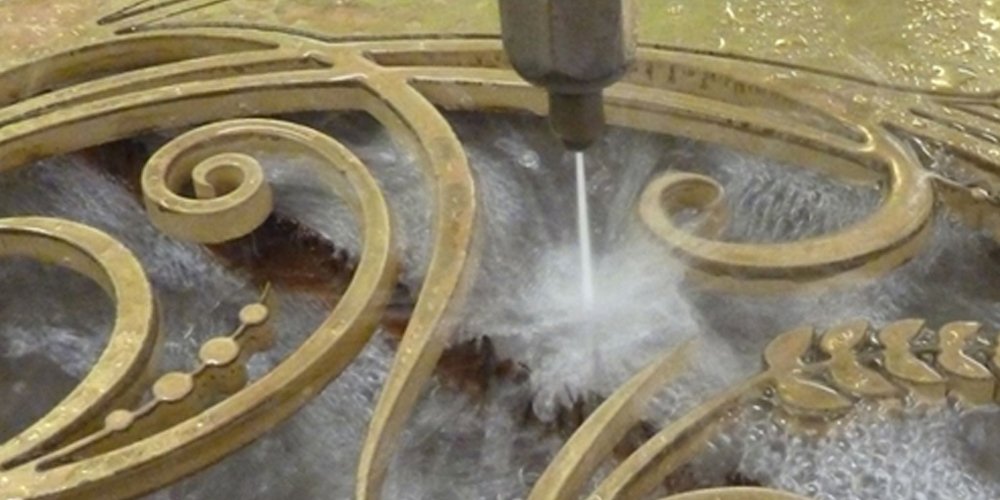
In architecture and construction, waterjet cutting is used for cutting intricate designs into stone, glass, and metal. Designers use waterjet machines to create custom flooring inlays, decorative elements, and architectural sculptures with precise detail. The technology allows for the customization of materials without the risk of heat damage or distortion.
4. Manufacturing
In general manufacturing, waterjet cutting is a go-to solution for custom parts production. Whether working with small batches or mass production, manufacturers use waterjets to cut everything from sheet metal to plastic and composite parts. The ability to cut virtually any material with high precision makes it ideal for industries requiring versatility and adaptability.
5. Art and Sculpture
Artists and sculptors have also adopted waterjet cutting for its ability to create intricate patterns and shapes from stone, metal, and glass. This technique allows for high levels of detail in custom sculptures, jewelry, and installations that would be difficult to achieve using traditional methods.
6. Medical Devices
The medical device industry relies on waterjet cutting for the fabrication of complex and small-scale parts, such as surgical instruments and implantable devices. The technology’s precision ensures the parts are made to exact specifications, and the cold cutting process prevents any heat damage to sensitive material
Conclusion
Waterjet cutting is a powerful and adaptable technology that continues to gain popularity in various sectors. Its ability to deliver high precision without the drawbacks of traditional cutting methods makes it an invaluable tool in modern manufacturing and design. As technology advances, the capabilities of waterjet cutting are likely to expand, further enhancing its role in innovative applications.
Wear Plate Waterjet Cutting in Chennai
Wear plates are abrasion resistant plates or liners that are used to reduce wear and tear in surfaces that are exposed to intense rolling abrasion and impact. View More
Titanium Cutting in Chennai
Titanium cutting is difficult due to the reactive nature of the material. Because the material is sensitive to heat, it must be cut at a relatively low temperature to prevent warping, discoloration, and contamination. View More

Plate Profile Cutting in Chennai
Plate Profile cutting are also capable of producing intricate cuts in material. With specialized software and 3-D machining heads, complex shapes can be produced. View More
Waterjet Cutting in Ambattur
Waterjet Cutting in Ambattur- Alind waterjet is one of the most affordable company in Ambattur and the high efficiency for water jet cutting service. We are pledged to provide competence and resources to continually support our customers with on-time delivery of close tolerance profiles at competitive prices. View More